


How to Crochet the Rice Stitch (Mini Basketweave Stitch) for Beautiful Texture

Learn how to crochet the Rice Stitch, also known as the Mini Basketweave Stitch, with this easy step-by-step tutorial. Complete with photo tutorials, video tutorials, written instructions, and a free washcloth pattern, this guide is perfect for beginner crocheters looking to add beautiful texture to their projects.
If you’ve ever admired beautifully textured crochet fabrics and wondered if they were too complicated to make, I’ve got some good news for you…
The Rice Stitch, also known as the Mini Basketweave Stitch, is much easier than it looks!
Like many crochet stitches, this one has picked up more than one name over the years. Some designers call it the Rice Stitch, while others refer to it as the Mini Basketweave Stitch because of the woven appearance it creates. Whichever name you know it by, you’re learning the very same stitch. I will refer to both names during this post.
The secret isn’t learning a brand-new stitch at all.
If you’re comfortable making double crochet stitches (US terms)—that’s treble crochet in UK terms—then you’ve already mastered the hardest part! The gorgeous woven texture comes simply from where you insert your hook around the stitch, rather than into the top loops.
You’ll be working a combination of front post double crochet (FPdc) and back post double crochet (BPdc) stitches to create this wonderfully squishy texture.
And don’t worry if post stitches sound a little intimidating.
I’ve included:
- detailed photo tutorials
- right-handed video tutorials
- left-handed video tutorials
- written instructions
- plus a free crochet washcloth pattern so you can practise everything you’ve learned straight away.
By the end of this tutorial you’ll not only understand how to crochet the Rice Stitch, but you’ll also have a beautiful textured washcloth to show for it!
What is the Rice Stitch?
The Rice Stitch crochet pattern is a wonderfully textured stitch made by alternating front post and back post double crochet stitches across the row, then reversing their positions on the following row.


This simple change creates a fabric that looks almost woven, giving rise to its other name—the Mini Basketweave Stitch.
Unlike traditional basketweave crochet, which uses groups of front and back post stitches to form large woven blocks, the Mini Basketweave Stitch changes every stitch, creating a much smaller, more delicate texture.
The finished fabric is:
- beautifully textured
- fully reversible
- warm and cosy
- stretchy without becoming floppy
- easy to memorise after just a few rows.
Once you’ve worked a repeat or two, you’ll likely find yourself crocheting along without constantly checking the pattern.
Is the Rice Stitch Beginner Friendly?
Absolutely!
I would class this as an advanced beginner crochet stitch.
The only skills you’ll need are:
- chain stitch
- double crochet (US terminology)
- knowing how to work around the post of a stitch.
If you’ve never worked front post or back post stitches before, don’t let that put you off. They’re much easier than they sound, and once you’ve tried a couple you’ll wonder why they ever seemed intimidating. And this stitch combination is made by just working a front post double crochet into the next stitch, back post double crochet into the next stitch and repeating it across your row!
Take your time, watch the videos if needed, and don’t be afraid to frog a row while you’re learning. Every crocheter has been there!
Why You’ll Love the Mini Basketweave Stitch
There are lots of reasons this has become one of my favourite textured crochet stitches.
✔ Beautiful woven appearance
✔ Easy one or two-row repeat (depending on whether you have an odd or even number of stitches)
✔ Looks impressive without being difficult
✔ Creates excellent stitch definition
✔ Fully reversible
✔ Perfect for modern home décor
✔ Great for gifting
✔ Works wonderfully in solid, tweed and lightly heathered yarns
Projects That Are Perfect for the Rice Stitch
One thing I particularly love about the Mini Basketweave Stitch is the fabric it creates.
Because the stitches sit tightly together, the finished crochet fabric is fairly dense with very few gaps. That makes it ideal whenever you want warmth, durability or extra absorbency.
Some of my favourite projects include:
Washcloths – The texture makes gentle scrubbing easy while the dense fabric absorbs plenty of water.
Dishcloths – Especially when worked in 100% cotton yarn.
Hand Towels – A lovely spa-inspired project that works up beautifully.
Blankets – The stitch creates a wonderfully cosy fabric that’s perfect for throws and lap blankets.
Scarves – The reversible texture means your scarf looks beautiful from either side.
Cowls – Soft, warm and packed with texture.
Cushion Covers – Perfect if you love adding texture around your home.
Placemats – Worked in cotton, they create a wonderfully rustic table setting.
Bags – The dense stitch provides more structure than many basic crochet stitches.
You May Also Like:
I have used this stitch combination in a couple of my patterns. For instance:
Tram tracks section of the free Adventure Blanket CAL
Friendship Blanket Square on the free Friendship Blanket CAL
And you can practice your front and back post stitches with these patterns:
Richard Wrist Warmers – a perfect quick make for the men in your life!
This free crochet cabled bookmark is a great way to practice your front post stitches!
The Bamburgh Breeze Scarf uses basic stitches but has front and back posts to create a tidy edging to your scarf.
Choosing the Right Yarn
This stitch works beautifully in almost any yarn weight.
For learning, I recommend using:
- Aran / Worsted (#4)
- a smooth, light-coloured yarn
- a hook recommended by your yarn label or 1 size up if you are a tight crocheter.
Smooth yarn makes it much easier to see the posts of your stitches while you’re practising.
Once you’ve mastered the stitch, try:
- cotton for kitchen or bathroom projects
- wool for winter accessories
- acrylic for blankets
- cotton blends for everyday household items.
Understanding Crochet Post Stitches
Before we begin, it helps to understand exactly what we’re working around. Normally, when making a double crochet, we insert our hook under the two loops at the top of the stitch.
With post stitches, we completely ignore those top loops. Instead, we’re working around the vertical part of the stitch underneath them. That vertical section is called the post.
How to Identify the Post of a Crochet Stitch
Take a look at one of your completed double crochet stitches.
You’ll notice:
- the “V” sitting across the top which is made up of the front and back loops
- a long vertical section underneath.

That vertical section is the post. Instead of inserting your hook into the top “V” which includes the back and the front loops, you’ll wrap your stitch around this vertical post instead. Once you spot it the first time, you’ll never unsee it!
What is a Front Post Double Crochet?
A Front Post Double Crochet (FPdc) is worked by inserting your hook from front to back to front around the post. This causes the stitch to sit proudly on the front of your work, creating raised texture.

What is a Back Post Double Crochet?
A Back Post Double Crochet (BPdc) is worked from back to front to back around the post. This pushes the stitch towards the back of the fabric.
Alternating these two stitches creates the signature Rice Stitch texture.

Rice Stitch Video Tutorials
Sometimes seeing the movement makes everything click. I’ve created both right-handed and left-handed tutorials so you can crochet along in whichever way feels most comfortable.


Right-Handed Tutorial – https://youtu.be/LdaTnTgtNEo
Left-Handed Tutorial – https://youtu.be/Wr6HuYkMxXw
Stitch Multiples and Pattern Repeats
One of the things I love most about the Rice Stitch (Mini Basketweave Stitch) is just how adaptable it is. Whether you’re making a washcloth, blanket, scarf or cushion cover, you can work this stitch over any number of stitches.
The only thing that changes is whether your stitch count is odd or even, as this determines whether you’ll be repeating one row or two.
Working with an Odd Number of Stitches
If your project has an odd number of stitches, you’ll find that the stitch pattern naturally lines up at the end of every row. This means you’ll repeat the same row over and over, giving you a simple one-row repeat.
As you work, you’ll always crochet the opposite post stitch to the one you’re looking at:
- If the next stitch is a Front Post Double Crochet (FPdc), work a Back Post Double Crochet (BPdc) around it.
- If the next stitch is a Back Post Double Crochet (BPdc), work a Front Post Double Crochet (FPdc) around it.
Once you’ve established the first row, it’s simply a case of reading your stitches and working the opposite post stitch all the way across.
Working with an Even Number of Stitches
If you’re working over an even number of stitches, the pattern behaves slightly differently. Because of the way the row finishes, you’ll begin the next row with the opposite post stitch from the previous row. This creates a two-row repeat.
For example, if your penultimate stitch on one row is a Back Post Double Crochet, you’ll begin the next row with a Front Post Double Crochet after your half double. Likewise, if your penultimate stitch is a Front Post Double Crochet, you’ll begin the following row with a Back Post Double Crochet after your half double crochet.
Don’t worry about trying to memorise this, though! The easiest way to crochet the Rice Stitch is simply to look at the next stitch and work the opposite post stitch around it.
The Simple Rule to Remember
If you only remember one thing about this stitch, make it this:
Always work the opposite post stitch to the one you can see.
If the stitch in front of you is raised because it’s a Front Post Double Crochet, work a Back Post Double Crochet around it.
If the stitch is recessed because it’s a Back Post Double Crochet, work a Front Post Double Crochet around it.
This simple rule works whether you’re crocheting in rows or in the round, and after a few repeats you’ll likely find yourself crocheting without needing to look at the written instructions at all.
Free Rice Stitch Washcloth Pattern
The best way to learn a new stitch is to use it straight away. Rather than making a practice swatch that ends up forgotten in a drawer, let’s crochet something useful together!
This beginner-friendly washcloth is the perfect project for mastering the Rice Stitch while creating something you’ll use again and again.
Whether you keep it for yourself, include it in a spa gift set, or make several for friends and family, it’s a quick and satisfying project.
Materials:
#4 weight cotton yarn of your choosing – you will need approx. 65 yards
5mm hook
Scissors
Tapestry needle
Stitch Markers optional to mark first or last stitch of the row.
Measuring Tape optional.
Gauge:
Does not matter as long as tension is consistent. My gauge was 16 sts and 12 rows of mini basketweave stitch in 4″
Size:
Once completed your washcloth will be approximately 8.5” square.
Abbreviations:
Ch(s) – chain(s)
St(s) – stitch(es)
HDC – half double crochet
FPDC – front post double crochet
BPDC – back post double crochet
YO – yarn over
FO – Fasten off
Pattern Notes:
– Written in US terms
– Chain 1 starts do not count as a stitch but Ch2 starts do count unless otherwise stated.
Remember the rules above about working a BPdc into the FPdc from the row below and vice versa!
The Free Mini Basketweave Stitch Washcloth Pattern:
** This is a free pattern on the Sunflower Cottage Crochet blog. If you are reading this anywhere else it is stolen content. Please do not copy and paste any part of it or print this pattern out. Please bookmark this page and use the website to work up your pattern. This helps my small business greatly as it provides a little bit of ad revenue which will in turn will allow me to continue to create free content for you!**
Note: I work through this pattern with you in the videos linked above.
Row 1: Ch32, dc into third ch from hook and each ch across (30)
Row 2: Ch2 (counts as a HDC), turn. *FPdc around the next st, BPdc around the next st* Rep from * to * until you have 1 st remaining. Hdc in last st.
Row 3: Ch2 (counts as a HDC), turn. *BPdc around the next st, FPdc around the next st* Rep from * to * until you have 1 st remaining. Hdc in last st.
Row 4 onwards: Rep rows 2 and 3 until your washcloth is square.
Easy Border option:
You may not need a border but if you decide to I recommend a simple 1 round of hdc:
Turn, Ch1 (does not count) HDC in each st across to the last st of the row. In the last st work 3 HDC
Turn your work 90 degrees so you are working down the side, and work HDC evenly down the side until you reach the final st of the side (I found 2-3 sts every 2 rows worked well for me. If you work too many, your edge will start to ruffle, too few and your edge will kink in on itself). In the last st work 3 HDC.
Turn your work so you are now working along the bottom of your blanket. HDC in each st across to the last st of the row. In the last st work 3 HDC.
Turn your work 90 degrees so you are working up the final side, and work HDC evenly up the side until you reach the final st of the side. In the last st work 2 HDC. SS to first HDC to join.
Tips for Success
- Use a lighter coloured yarn while learning.
- Count your stitches every row.
- Don’t pull your post stitches too tightly.
- Feel the texture with your fingers—you’ll quickly notice whether the next stitch should be front post or back post.
- Watch the videos alongside the written instructions if you’re unsure.
Frequently Asked Questions
Is the Rice Stitch the same as the Mini Basketweave Stitch?
Yes. They’re two names for exactly the same crochet stitch pattern.
Can beginners crochet the Rice Stitch?
Absolutely. As long as you’re comfortable with double crochet stitches, you’ll quickly learn front and back post stitches.
Does the Rice Stitch use a lot of yarn?
It uses slightly more yarn than plain double crochet because of the extra texture and because you are working each front or back post stitch around the post so your stitches are not quite as tall, but the finished fabric is wonderfully thick and durable.
Can I crochet the Rice Stitch in the round?
Yes! The stitch adapts beautifully to working in rounds, although this tutorial focuses on working it in rows. If working in rounds slip stitch to join, Ch1 and start your front or back post stitches immediately. You do not work the first or last hdc stitches as you do when working in rows.
Is the Rice Stitch reversible?
Yes. Both sides have the almost identical, beautiful texture, making it ideal for scarves, blankets and home décor.
Final Thoughts
The Rice Stitch—or Mini Basketweave Stitch—is one of those crochet stitches that looks wonderfully intricate while actually being surprisingly simple to work.
Once you’ve mastered front and back post stitches, you’ll find yourself reaching for this stitch again and again. It creates gorgeous texture, works up into a sturdy fabric, and is suitable for everything from cosy blankets and scarves to practical washcloths and stylish home décor.
I hope this tutorial gives you the confidence to try something new. Remember, every experienced crocheter was once learning their very first post stitch too. Take your time, enjoy the process, and before long you’ll be creating beautifully textured projects with ease.
If you make the washcloth, I’d love to see it! Share your finished project in the Sunflower Cottage Crochet Facebook Group or tag me on social media so I can admire your beautiful stitches.
Happy crocheting! 🧶
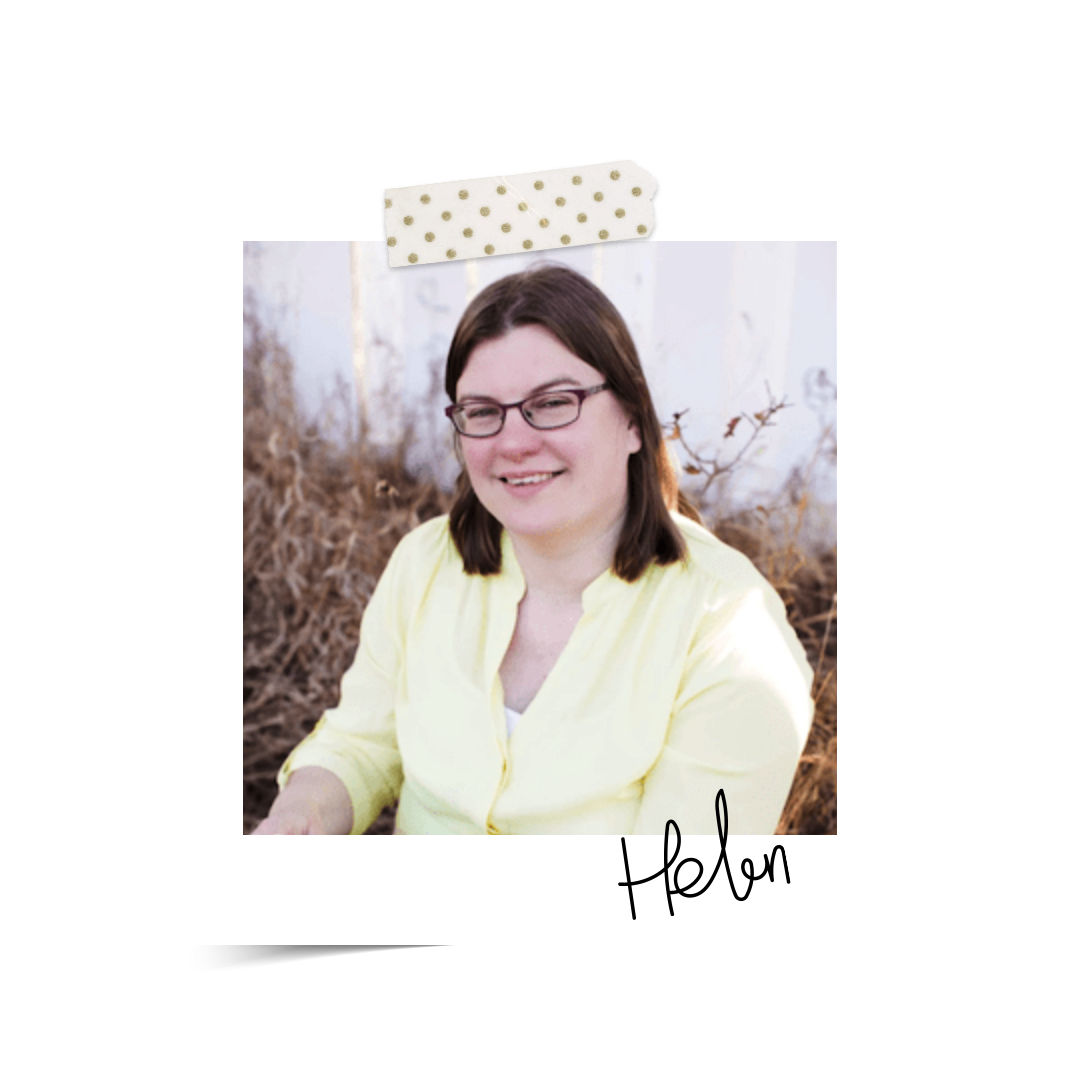
Hi! I’m Helen
I live on the north-east coast of England, UK. I am a mum and wife and enjoy reading and quilting. I started crocheting at 14 years old.
Sunflower Cottage Crochet is dedicated to empowering crocheters of all levels. I provide modern, easy-to-follow crochet patterns and video tutorials that make learning new techniques simple and accessible. My mission is to empower crocheters in their creativity, enabling them to confidently create beautiful projects no matter where they’re at in their journey. Whether it's a beginner seeking out the basics or an experienced enthusiast looking to level up their skills. My vision is for every user to experience the joy of mastering creative expression through crochet!


